|
|
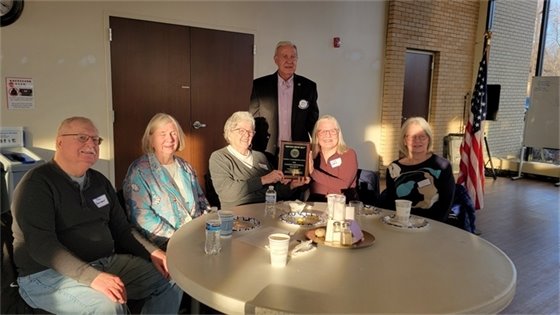
Chaska's Highest Service AwardThe Chaska Historical Society is the 2025 recipient of the George C. Klein “Service above Self” award given by the Chaska Rotary. This award, first given in 1980 by the Chaska branch of the Rotarian organization, is an honor given to organizations or individuals who have made a marked difference in building the Chaska community through the giving of their time and talents. We are honored that our 45 years of volunteer work for the community of Chaska has been recognized with the George C. Klein “Service above Self” award! As an all-volunteer organization since our inception in 1980, we have accomplished—and continue to accomplish--an incredible amount. - Volunteers have inventoried, catalogued, and preserved over 10,000 photos and over 5,000 objects that collectively bring Chaska’s history to life.
- We have brought Chaska history to a variety of audiences of all ages through school and scout presentations, tours and carriage rides, events through the library, and at retirement communities and other gathering spaces.
- We have helped hundreds of people with their personal research, from those working on Chaska-related genealogy to those reliving Chaska glory days. Our Herald and Sun newspapers, our high school yearbooks, our flood scrapbooks, our plat maps and church histories and cemetery records and more—are all available to researchers free of charge.
- We have researched, designed, and created in-depth displays on aspects of Chaska history, remembering that the topics exist within a larger societal context, and that organizations and businesses and interest groups are more than just the leaders—remembering workers and participants are part of what makes the experience uniquely Chaskan. These displays are also a gift to the community and beyond.
- We have researched the Chaska history of multiple organizations to allow them to reflect on where they started and to anticipate where their future may lead them.
- We have compiled clippings and memorabilia for hundreds of Chaska-related subjects to help researchers quickly find answers to their questions.
- We have also complied a large number of published histories of local families as well as obituaries and newspaper clippings on hundreds of local individuals for genealogical research, and offered professionally led genealogical research classes and workshops.
- We have published detailed books of Chaska history, some of which are in the Library of Congress.
- We have encouraged high school and college students to delve into their passion for local history by offering an annual scholarship.
- We have developed and maintained a digital presence through our website, which, in addition to giving an overview of our organization, features some virtual exhibits, research resources, links to additional web connections, and more. Our digital presence also includes a regular social media connection with the world.
- We have carefully developed an infrastructure that supports our membership and volunteer staff through annual meetings, newsletters, trainings, and gatherings.
- We continue to strive to make our organization one which brings Chaska history to people in a way that is accessible and relevant.
Thank you to the Chaska Rotary for this honor, and to all of our volunteers, members, and supporters for your continued interest in YOUR community and its history! Your involvement on any level speaks to what makes Chaska a special place for all of us who call it home. |
|
|
|
|
|
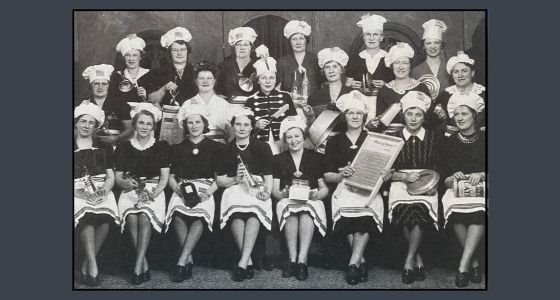
Share Your Story: Honoring the Women of ChaskaThe Chaska Historical Society invites you to contribute to our upcoming 2025 exhibit, which will highlight the technological and cultural changes for women in Chaska from 1849 to the present. We are collecting stories that reflect the experiences, achievements, and lives of women throughout Chaska's history. Your submission will be preserved in the Society’s archives and may be featured in the exhibit. We welcome stories of all types—whether personal, family-related, or from your unique perspective as a resident of Chaska. Submit your story! |
|
|
|
|
|
Murder and Mayhem in Chaska?Join us for the 2nd Annual What?! Murder and Mayhem in Chaska?! Walking tour of Historic Chaska. Hear about a different side of Chaska’s history: an outlaw gang, jail breaks, drunken people and drunken horses, and some just not very nice people you probably wouldn’t want to meet. Some stories are very serious and some are just humorous. Test your knowledge of murder and mayhem with some trivia questions. If you are 18 or older register to join us at the Chaska History Center (112 W. 4th Street). The walking tour will be less than a mile, rain or shine. Tickets are $20 per adult (no children) and are non-refundable. Dates and times: - April 25 at 6:30 p.m.
- April 26 at 1:30 p.m.
- May 2 at 6:30 p.m.
- May 3 at 1:30 p.m.
- May 9 at 6:30 p.m.
- May 10 at 1:30 p.m.
Register for one of our tours! |
|
|
|
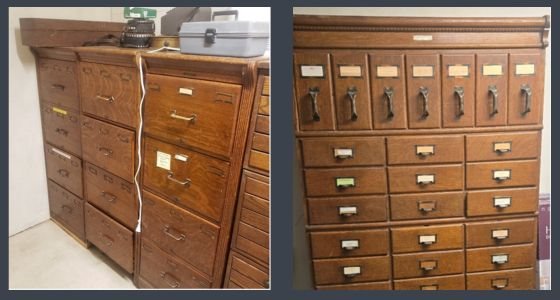 File cabinets from the Sugar Factory |
|
|
|
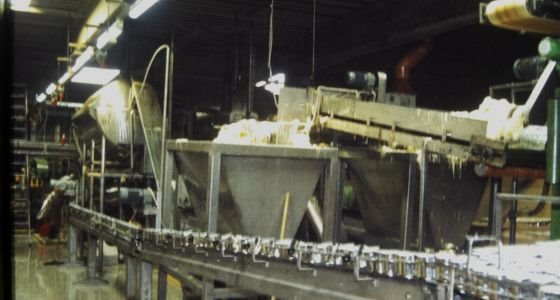 Processing sauerkraut at the Gedney Factory |
|
|
|
Recent Additions to our CollectionSugar FactoryWe want to say a very BIG thank you to the Sugar Factory who thought of us when they were cleaning out the storage area in their former vault. We received the file cabinets shown in the picture (which are now housing our obituary files) as well as a taller wooden cabinet (that is now housing our yearbook collection). Also many pictures and plat maps. The two wooden cabinets are being used in the office so you can see them the next time you stop in.
A bit of history: When the sugar factory was originally built the office was in a small building on the north side of Stoughton Ave. The vault installed in that office had cement block walls and several doors. When the factory stopped actually processing sugar beets and became a storage facility they sold the land on the north side of Stoughton and moved the office and the vault into the main floor of the factory. Can you imagine tearing down the very thick cement block walls, moving and reinstalling them? Do you know why they switched from processing beets to storing liquid sugar? In 1979 a railroad bridge failed and since the sugar factory was the only company using that line it was decided it was not worth fixing. Gedney'sWe want to say a thank you to the current staff at the former Gedney's Pickle factory who called both us and the Carver County Historical Society and gave us our pick of what we wanted from their archives. They are no longer producing pickles here in town, but do still have a warehouse near here for finished product, which they were moving so wanted to clear out come space. A bit of history: Did you know that Gedney's operated in Minneapolis for many years before coming to Chaska? Anything from those years we pulled and will deliver to the Minnesota Historical Society. The land on Stoughton was actually annexed into Chanhassen before the plant was built (for tax advantages), but they always listed Chaska as their location as prior to the construction of that plant, Gedney was in downtown Chaska for decades and contracted with local farmers to grow cabbage, cauliflower, mustard, etc. They did not just process pickles in the factory, they also did sauerkraut. |
|
|
|
|
|
Explore Your AncestryAre you curious about your ancestry? Sign up for one of our Genealogy Series sessions, running to July 2025. This engaging series includes both presentations and workshops to help you explore your family's past and uncover fascinating stories along the way. Series Schedule: - Presentations: First Thursday of each month, 6:30 pm to 8:30 pm
- Workshops: Third Thursday of each month, 6:30 pm to 8:30 pm
Note: July presentations will be held on the second and fourth Thursdays, respectively.
Presentation Topics: - April 10: Borders and Benchmarks: Unearthing Immigration and Court Records
- May 8: Roots and Real Estate: Discovering Family History through Land Records
- June 12: Heroes Among Us: Tracing Family Military History
- July 10: Digital Discoveries: Navigating Online Genealogy Resources
Registration Information: - Individual Presentations: $20 for non-members, $15 for Chaska Historical Society members
Please note that all registrations are non-refundable.
Don't miss this unique opportunity to dive into your family history with expert guidance. Join us at the Chaska Historical Society and begin your journey into the past today! Sign up for Genealogy Series |
|
|
|
|
|
Carver County Historical SocietyDid you know that being a member of the Chaska Historical Society also automatically makes you a member of the Carver County Historical Society in Waconia? Carver County uses the same museum software to catalog their collections as we do here in Chaska. However, they have gone one step further, and most of their photo collection is available to their members via their web site. It is available to members only and requires a password that is changed yearly. If you would like to access their photo collection, send an email to us at historical@chaskahistory.org. We will verify your membership and then email you the password. We also have 10,000+ photos in our collection. Just give us a call or email us to see if we have what you are looking for. |
|
|
|
|
|
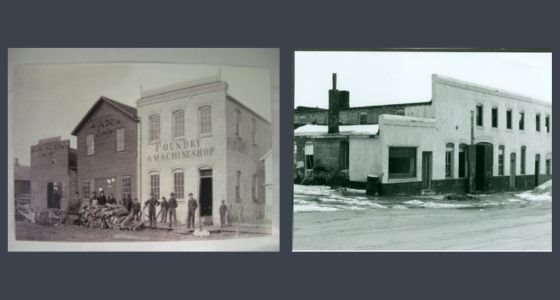
Ess FoundryMany Chaska “old-timers” will remember the Ess Brothers and Sons Foundry that stood at the corner of Walnut and 2nd Street where Townsquare Apartments now stand. When the foundry closed they moved the company to Loretto, where it is still in operation today. It is on the sixth generation of Ess family ownership. They are doing some remodeling to their offices and came to see us to get some pictures of the original factory to put up in the office as part of the remodeling. |
|
|
|
|
|
Chaska - More than a NameBy Ruth Travis Chaska. Ches-Kay Wičhánhpi Waštédanpi (pronounced We-Chank-pi Wash-ta-don-pee. In Dakota, the correct diction requires pronouncing the letter “n” without letting the tip of your tongue touch the roof of your mouth. …trying it, aren’t you?) We’ve all been told Chaska was an indigenous person and a native of one of the 7 Council Fires of Dakota Peoples who predated, as well as interacted, with the early European settlers to this area. “Chaska” is generally interpreted to mean “first born son” and reflects one of the six classes of names traditionally utilized throughout the lifetime of an individual Dakota Sioux person -- specifically in this case, birth order. There were many men known as Chaska among the Dakota. It is believed the spirit name of the individual after whom our village, town, and city is named was Wičhánhpi Waštédanpi, meaning “Good Little Stars.” While colloquially known as Chaska by his family and people, his spirit name given at birth would have been spoken sparingly, reverently, with the greatest respect, and most appropriately in ceremonial events. Looking for a good read? In the fiction category, I would recommend Blood Moon, A Captive’s Tale by Ruth Hull Chatlien. This is the story of Sarah F. Wakefield -- a local woman who was captured (or rescued, as the story evolves), and kept from harm during the 1862 Sioux Uprising by the Mdewakaton Dakota man, Chaska, and his mother, Ina. Mrs. Wakefield is later returned safely into the hands of soldiers deployed from Fort Snelling by Chaska himself at Camp Release. This story is an easy read, and though fiction, is based directly on the personal recounting of the same, written by Sarah F. Wakefield. If you prefer nonfiction, consider reading Sarah F. Wakefield’s chronicle of her own story, Six Weeks in the Sioux Tepees, A Narrative of Indian Captivity, written and published in 1863 and 1864. Though the Wakefield recounting is only 75 pages, this expanded edition includes an introduction to the history and events leading up to and after the Sioux Uprising written by June Namais, Associate Professor of History. Namais has also added maps, archival photographs, a chronology of events, expands upon the trial of Chaska, and his death by hanging in Mankato among the 38 + 2. I challenge you also to learn more. Most of us grew up learning Minnesota history from the view point of the European colonists who explored and settled in Minnesota Territory, homesteaded, and conquered the indigenous people who occupied or migrated through this land. Earlier this fall I reread What Does Justice Look Like? The Struggle for Liberation in Dakota Homeland by Waziyatawin, Ph.D. Born in Virginia, MN, Waziyatawin (in Dakota meaning “woman of the north”) majored in History and American Indian Studies at the U of M and then completed her master’s and doctoral degrees in History at Cornell University. She is recognized as a leading Indigenous intellectual, taught at Arizona State University, and was the Canada Research Chair in Indigenous Peoples in the Indigenous Governance Program at the University of Victoria. I first read this book in 2008 when she wrote it and was published by Living Justice Press in St Paul as a “truth telling” perspective of the Dakota Oyate (Nation) in response to the Minnesota Sesquicentennial Commission’s plans to celebrate 150 years of statehood. You might consider borrowing this one from your local library as an audio book. Read by the author herself, listening to a Dakota voice relate the history of colonization, broken treaties, genocide, and ethnic cleansing is painful, but that is sometimes the consequence of truth telling… All three of these books are powerful reading and enlightening in that they will expand your understand of our local history. And I trust you will be better prepared to answer the next time someone asks you the questions we hear frequently in the Chaska History Center: “Did Indians live here?” and “Was Chaska a real person?” Yes. And yes. |
|
|
|
No Stork Needed for this Home Delivery: Chaska Mail-Order HomesThe first half of the 20th century saw great strides in U.S. industrial innovations, from widespread electrification to the mass production of vaccines to, surprisingly, the introduction of early computers. Home construction also had its share of innovation, including kit homes (popularly called ready-cut or mail-order homes). Even today—decades after production ceased—mail-order homes continue to fascinate both homeowners and fans. What’s a Mail-Order Home?The mail-order home business began in the early 1900s. Early manufacturers shipped the lumber and other materials, leaving it up to a homeowner to cut everything to size to construct a house. After 1916, Sears, Roebuck and Company—the largest provider of mail-order homes—began to precut timbers to the right length and angle. At the 1919 U.S. Housing Corporation Hearings, a representative of Sears explained, “A ready-cut house should not be confused with a sectional-portable house [for example, a Quonset hut], which can be taken down and moved by being unbolted. A ready-cut house is a permanent house and the method of its construction is not different from any other frame house where the lumber is framed [manually by carpenters]” (p. 719). |
|
|
|
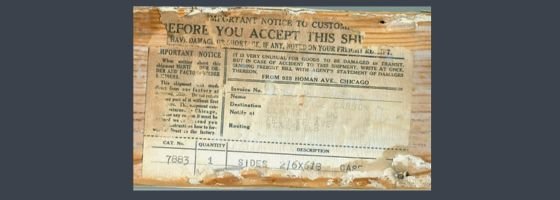 A shipping label for a Sears mail-order home (Courtesy Wikimedia Commons) |
|
|
|
Sears Modern Homes was the largest mail-order home supplier, but the first supplier was Aladdin Homes, of Bay City, Michigan, premiering in 1906. Approximately 75,000 Aladdin mail-order homes were constructed from that time through 1981, though most were built in the first half of the 20th century. A host of companies got in on the action along with Aladdin: Wardway Homes (Montgomery Ward), Harris, Gordon-Van Tine, and others. Sears piggybacked on its already popular mail-order catalog, from which one could order seemingly anything for the home and farm. Sears leadership decided, “Heck, we sell everything else. Why shouldn’t Americans be able to order an entire home?” Already having Sears catalogs in millions of homes gave the company a huge promotional advantage over other companies. |
|
|
|
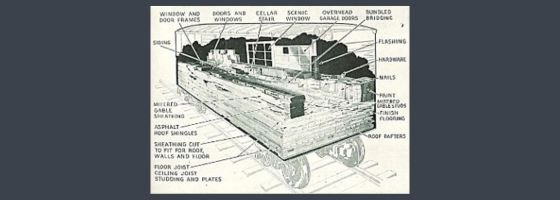 Cutaway of boxcar with Aladdin mail-order home parts (Courtest Wikimedia Commons) |
|
|
|
Why were Mail-Order Homes Popular?A post-World War I housing boom boosted the popularity of mail-order homes. Many people became interested in these homes because they were less expensive than hiring various contractors and purchasing the materials separately. Buying the entire structure and constructing it themselves, homeowners could reduce construction costs by as much as 40%. This, of course, was back in the days when more people were accustomed to doing their own labor. Another draw to these homes was their up-to-the minute fittings. Modern conveniences including electricity, heating systems, and indoor plumbing were included in many, though not all, models. Everything could be purchased at the same time, from the lumber to roofing to windows and doors to interior and exterior trim. Customers ordered standard models as they appeared in a catalog, or they could customize with higher-quality materials. Sears, for example, ended up offering more than 300 models of homes. |
|
|
|
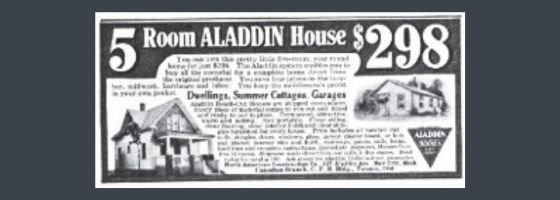 Ad for Aladdin home, 1915 (Courtesy Wikimedia Commons) |
|
|
|
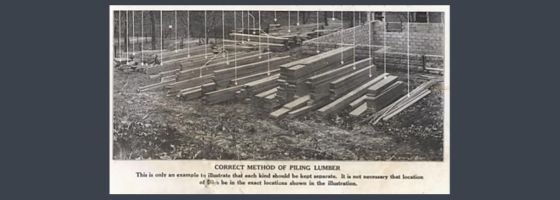 Components from a Montgomery Ward Wardway mail-order home (Courtest Internet Archives) |
|
|
|
A typical home could fill about two train cars with 25 tons of material and up to 30,000 parts. Most train cars had to be unloaded within about 24 to 48 hours to comply with railroad policies. Because the homeowner was responsible for hauling the materials to a building site, most mail-order homes were constructed within a couple miles of a train station. |
|
|
|
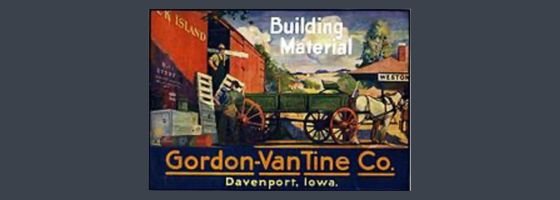 1922 catalog cover depicting unloading of materials for a Gordon-Van Tine home (Courtesy Wikimedia Commons) |
|
|
|
The post-World War I boom in mail-order homes largely ended in the early 1930s with the beginning of the worldwide Great Depression (1929–1939). However, a second boom (let’s call it a boomlet) followed World War II, as a rising middle class became interested in owning their own home. Eventually the boomlet also faded. Mail-Order in ChaskaAmong the many places mail-order homes can be found is Chaska, specifically at the corner of West First Street and Hickory. Evidence points to the home being manufactured by the Aladdin Company of Bay City, Michigan. Aladdin manufactured not only domestic dwellings but also military housing and even some large-scale development plans such as “company towns,” for housing workers of large employers. |
|
|
|
 Photo of the Chaska Aladdin home (Courtesy Steve Schmidt) |
|
|
|
As noted, “evidence points” to Aladdin. It’s not always easy, however, to track down the manufacturer of a mail-order home or even to know whether a structure is, indeed, such a house. Home manufacturers freely borrowed (aka, stole) from and altered each other’s housing designs. However, the following efforts were made to determine the age and manufacturer of the Chaska home: Searches were conducted of Aladdin catalogs, available online, from 1900 through 1950. The catalogs featured front and side elevations of various models of homes, but nothing definitive was to say this home was from Aladdin. It’s possible the house was remodeled or added to, making a visual identification difficult. The most convincing evidence of the home’s manufacturer was a series of boards the homeowner recovered during renovations. Apparently, the Mary Burkhardt [sic] family ordered the materials, which were delivered to Chaska. |
|
|
|
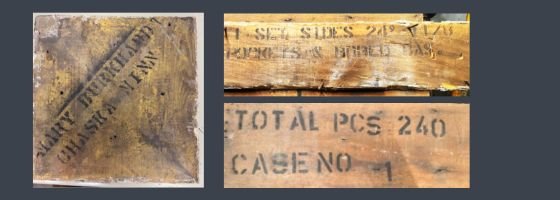 Pieces of shipping containers found at the Chaska home at 1st and Hickory indicate that it is an Aladdin home (Courtesy Steve Schmidt) |
|
|
|
Even ascertaining the year of construction proved not quite conclusive—not surprising, given that the house was built more than a hundred years ago. A visit was made to the county courthouse in Chaska. The recorder politely informed the researcher their office dealt only with property issues, but one might try the assessor across the hall. The assessor provided a property report on the structure, which claimed it was built in 1909. Lisa Oberski, president of the Chaska Historical Society (CHS), commented that “in the past, the courthouse date accuracy for early structures has been rather arbitrary.” She recommended using historic Sanborn Fire Insurance maps, available online at the CHS website. The highly detailed Sanborn maps show entire towns throughout the U.S., on a nearly microscopic basis. Among other information, they present lot-by-lot footprints of which structures existed on a given piece of property, as well as the number of stories and construction materials. Given that the maps were used for assessing fire risk—and thus financial risk to the company—the information found in them is assumed to be accurate. Sanborn updated the maps periodically. A 1911 map shows that the property in question was undeveloped, indicating that the Aladdin home must have been built after that year. The 1924 map update shows that a home and carriage house were on the property. This information indicates that the home must have been constructed during those 13 years. The homeowner pointed to an Aladdin catalog from 1918 to further narrow the year of construction. An illustration showing a colonnaded entry into a room is almost identical to an actual colonnade found in the house. Furthermore, the Carver County Historical Society dug up an article from the Weekly Valley Herald (later the Chaska Herald), with a 1939 obituary for Fred Burkhart, Mary’s husband. According to the article, Fred returned to Chaska in 1919 after some years away. This date tends to agree with the catalog, providing additional evidence. |
|
|
|
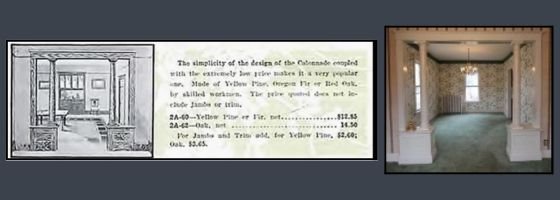 Colonnades in a 1918 Aladdin catalog (left) closely match those in Chaska mail-order home (right) (Left - Courtesy Clarke Historical Library, Right - Zillow) |
|
|
|
The exact year of construction was difficult to find, but Identifying the home as an Aladdin offering was less problematic. Cindy Catanzaro, an expert moderator for the Facebook group Kit Homes—Sears, Harris Brothers, Wardway, Gordon-Van Tine, & Aladdin, compared the printing on the boards to some that “match the markings I found on a house near me that was identified as a kit home from Aladdin.” She referred to an article by noted mail-order homes researcher Rebecca Hunter about identifying Aladdin homes: “Early numbers are handwritten in grease pencil. . . . Later numbers may be stamped in ink. . . . Part names may be stamped in ink.” Bottom line: The home is an Aladdin kit home constructed between 1911 and 1924 (possibly 1918 or 1919, based on the Aladdin catalog image and the date Fred Burkhart showed up in Chaska), and delivered to “Mary Burkhardt” of Chaska. Without an abstract or other documentation, the actual date of construction may never be 100% ascertained. How Do I Know if I'm in a Mail-Order Home?You may wonder about your own home’s origins. Consider the following: - Many mail-order home companies used distinctive identification markings on pieces. For example, Sears stamped alphanumeric codes on the lumber—one letter and three numerals—at a specific distance from the end of a framing piece. You may view these markings on ceiling joists in an unfinished basement, for example, or on exposed rafters in the attic. A bathtub’s access panel may allow access to marked framing timbers.
- Original fixtures (heating, electrical, plumbing) are sometimes stamped with a logo or name of the manufacturer. Checking doorknobs, hinges, and other hardware may be helpful (for example, Sears bathtubs may have a small circled SR in the lower corner farthest from the spout.)
- Exterior or interior details (such as the positions of doors, windows, or chimneys) may provide clues about a house’s mail-order manufacturer. Such details, however, can be a less reliable way to identify houses, given that most remaining mail-order homes have been altered or “borrowed” by other builders for their own designs.
- Compare your home’s room dimensions to floorplans from mail-order-home catalogs. (The Internet has extensive libraries of floorplans.)
- Check the back of window trim or baseboard molding for shipping labels.
- Consult your community’s “oral histories.”
- Check the county recorder’s office. Old mortgage records may name the financing entity. If the records show that a home was financed by Sears, Roebuck, for example (which it did between 1913 and 1933), you can be almost certain it is a mail-order Sears Modern Home, especially if combined with other clues. Other financing companies may provide clues to the manufacturer of a house in question.
Learn More!Thank you to Cindy Catanzaro of the Kit Homes Facebook group for her help in identifying the Chaska mail-order home. |
|
|
|
|
|
The Poor CommitteeBy Ruth Travis Once upon a time, in a quaint rural setting along the banks of the Minnesota River, first the rural Town of Chaska, then the Village of Chaska, and eventually a newly elected and burgeoning 1891 Chaska City Council dedicated themselves to establishing official and effective governance. Without a doubt, they made mistakes. They instituted, amended, and rescinded ordinances. They established policies for the good of all and were sometimes hard-pressed to convince their own neighbors to comply. Growing pains were evident. But in reading the Town, Village, and City Council Minutes through those early decades, I also see the caring and compassion these leaders believed to be integral to the heart and soul of their community. Despite having first been taken aback by the assigned name, I was intrigued by the expense reports of “the Poor Committee.” Monthly, the Council reviewed the expenditures accrued by the Poor Committee and occasionally directly discussed the needs of certain persons. They approved and never refused payment of the Poor Committee’s expenditures. Frequent items billed by local merchants with the blessing of the Poor Committee included, but were not limited to, rent and housing, firewood, coal and fuel oil, home repairs and heater or stove replacement, groceries, produce and milk deliveries, medicine, medical supplies and sundries, doctor visits, hospital stays including transportation to and from medical facilities as well as home care nursing, water and light bills, clothing, and occasionally end of life care, including “laying out the body,” coffins, burial ground, and the burial. Each of these individual situations and extenuating circumstances was reviewed and attended by the citizens appointed to the Poor Committee. Not everyone who appealed to The Poor Committee was afforded support. Cases were carefully considered. Some were denied and those actions were reported as well, in which case the minutes reflect “not entitled to relief.” The Poor Committee was not to be duped or taken for granted. However, the City Council Minutes also report the Poor Committee to have provided services defined as “Emergency Relief” to “displaced persons” or “paupers” or “transient families” and occasionally included wording as vague as “Care for self and family” without discussion or question. In an effort to be transparent and accountable in the expenditure of their limited financial resources, the Chaska City Council published their expenditures in the local newspaper, inclusive for all to see, the full names of persons served by the Poor Committee. …with the exception of a Go Fund Me campaign or benefit event, to do so would most certainly be deemed inappropriate by today’s standards. Then, in 1939, within his biennium address to the Chaska City Council, Mayor W.A. Kroonblawd said (and I quote from the Clerk’s transcript): “…I have but one recommendation to make. We have had a committee known as the Poor Committee to which designation I object. Many of those who are forced to ask relief of the City are people of character who have tried just as hard as any of us to make a living, but through unfortunate circumstances, have been compelled to look to the City for help. I do not believe that the self-respect of these people should be lowered in this matter by referring to them as poor. I recommend that the name of this committee be changed to the Committee on Public Welfare…” Like Mayor Kroonblawd, I struggled with the abjectly named Poor Committee through eight decades of Town, Village, and City Council Minutes. Long before “Welfare” became a federal or state government agency or aid program, the Webster dictionary defined welfare as “the state of doing well, especially in respect to stability, happiness, and well-being.” Mayor Kroonblawd’s recommendation was intended to better fit the purpose and mission of the City Council in their commitment to financially support the work of this Committee. As for me, I am proud to live in a community that has historically and so forthrightly cared for the well-being and the welfare of its population in the truest and purest sense of the word. |
|
|
|
|
|
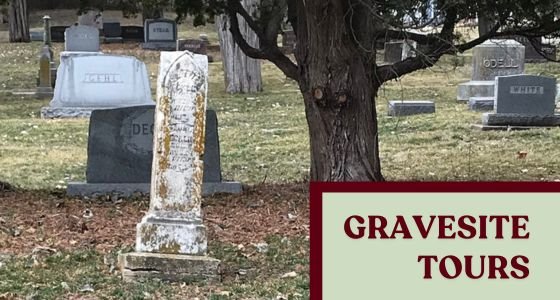
Graveside Tales TourDo you like to think about what life was like in the past? When you drive past a cemetery or wander through one, do you ever wonder who these people were? Would you like to meet some of these folks and hear their stories? Learn what it was like to settle the frontier in those early Chaska days. You may be surprised at some challenges they had; but also their joys. The Chaska History Center is sponsoring a new Graveside Tales Tour at Guardian Angels Cemetery. Reenactors from the Minnesota Living History Society will portray some of those early settlers who have passed on and share their stories. This tour is for adults only (18+), please no children. There will be time for questions and answers at the end of the tour. The tour involves navigating hills and very uneven ground. We will meet at the lower level of Guardian Angels Cemetery. The cemetery is located off Big Woods Dr. ( County Rd. 44. northwest of Chaska) In case of light rain the tour will go on. If the weather becomes severe, the tour/ reenactment will move to the Chaska History Center, 112 Fourth St. West. The date of the tour is June 28, 2025. Cost is $25 (no refunds). Times: - 10:30 a.m. - Noon (Please meet at the lower level of the cemetery at 10:15 a.m.)
- 1:30 p.m. - 3 p.m. (Please meet at the lower level of the cemetery at 1:15 p.m.)
Sign up for a tour! |
|
|
|
|
|
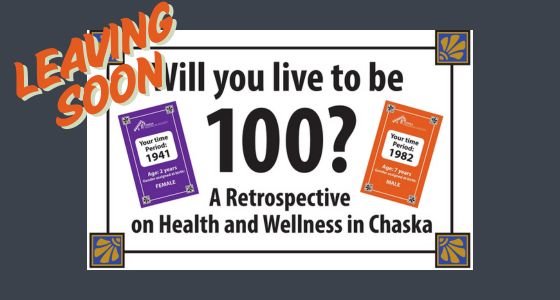
Leaving Soon!Don’t miss your chance to see the "Will You Live to Be 100? Health and Wellness in Chaska” exhibit!
The exhibit will be taken down in early April to get ready for the next display, so come see it while you can!
Our hours are Tuesdays, Fridays, and Saturdays from 1-4 p.m. Our address is 112 West 4th Street in Downtown Chaska. |
|
|
|
|
|
|
|