We're on Substack!The Chaska Historical Society is excited to be on Substack. We believe this will be a great place to share some of our well-researched articles on Chaska history. You will notice that some of the long-form articles that typically appear in the newsletter now have a brief intro and a link to read the full article. The link will take you to Substack, where you can enjoy reading the rest. Substack is a free platform that gives us the opportunity to publish articles in a format that is easy to read and adapts to whatever screen you are reading on (computer, tablet, phone, etc.). We hope you enjoy and subscribe and/or follow us on Substack! |
|
|
|
Developing Organization Priorities for 2026By Lisa Oberski, Chaska Historical Society President With every new calendar year, the Chaska Historical Society Board of Directors revisits in depth our vision statement, mission statement, and core values and ensures that the goals of our strategic plan still align with and support them. This year, 2026, is no different. In the past we have referred to Chaska’s list of core values as our beacon; these eight values are citizenship, environmentalism, generosity, human worth and dignity, integrity, learning, respect, and responsibility. To sharpen our organization’s focus for maximum effectiveness, though, this year we are articulating how our organization follows the eight values. Once they have been defined and established, we will revisit our vision and mission statements for alignment, then revisit our strategic plan objectives. What have been our strategic plan objectives/goals? We have had five, originally developed in 2018, and modified in 2024. By 2030, we will: - Increase our connections to Chaska youth and adults so that at least 1,000 people in each group will have some contact with Chaska history programming each year.
- Design a comprehensive and sustainable local historical information-gathering system to ensure we have contemporary collecting for the future.
- Create, maintain, and expand a successful volunteer recruiting and retention plan so that the number of volunteers choosing to contribute rises from about our current 30 to about 50.
- Partner with 10 organizations to research their history for sharing with the community.
- Have enough funds in our Community Foundation accounts to sustain, through their earnings, two part-time staff positions (executive director and collections manager) for organization sustainability and stability.
Though all five of these objectives have merit, we have not addressed them equally. We have gone well beyond the first goal, for example, are making steady progress on the third goal, while doing little toward the fifth goal. Discussions about values and objectives are lengthy, requiring larger chunks of time beyond the monthly board meetings. They took place throughout January. We will then convey the board’s decisions to our volunteers and membership. |
|
|
|
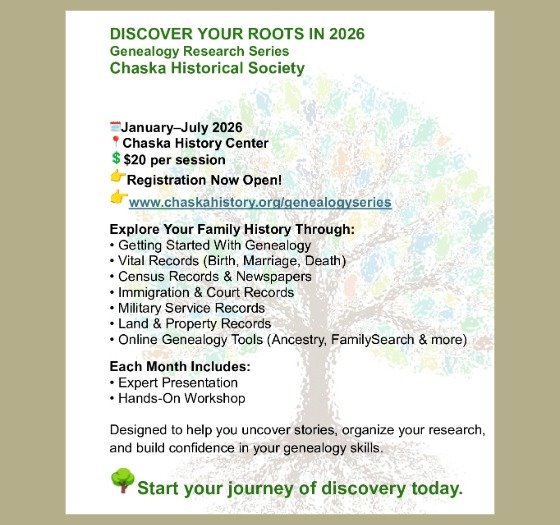
Discover Your Roots in 2026 |
|
|
|
|
|
The Shaska Company and Chaska's Tumultuous BirthBy Charles Pederson Chaska was born in the confusion of Minnesota’s prestatehood period. Between 1851—and the treaties of Mendota and of Traverse des Sioux—and Minnesota’s statehood in 1858, federal land policy drove Chaska’s founding. The short-lived Shaska Company, speculating in the land fever, pursued civic projects and a milling canal to dream of profits that never came. Read the full article. |
|
|
|
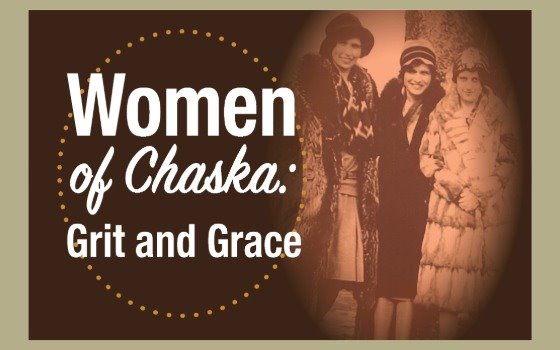
History and Hemlines Walking Tour AnnouncedBy Connie Jacobs The Chaska Historical Society is excited to announce their new spring walking tour, History and Hemlines: The Long and Short of It. The new tour, offered in April and May 2026, will complement the Women of Chaska: Grit and Grace exhibit, but with a twist. You will hear about independent women, divorcees, and more. Did you ever wonder what the lives of women were really like in 19th- and early 20th-century Chaska? You might think they were quiet, unassuming homemakers. You might also assume that, if women did work, they were most likely laundresses, teachers, or librarians. The new tour will be a fun exploration of women who didn’t fit the stereotypes. Some of the women we will talk about were put into extreme circumstances by the death of a spouse or divorce, some were enormously independent, and some were just trying to get by. We will introduce you to entrepreneurs, hard-working women, hotel keepers, a saloon keeper, a few teachers, and of course a few scoundrels. Come prepared to walk—but dress for the weather, as we will go, rain or shine. The walking tour will cover a little less than a mile and last about an hour and a half. The tours will leave from the Chaska History Center, 112 Fourth Street West, at the times shown below. Tickets are $20 (nonrefundable) for adults only (18 or older). Dates and times of the tour: - Friday, April 24 at 6:30 p.m.
- Saturday, April 25 at 1:30 p.m.
- Saturday April 25 at 6:30 p.m.
- Friday, May 1 at 6:30 p.m.
- Saturday, May 2 at 1:30 p.m.
- Saturday May 2 at 6:30 p.m.
Registration opens and ticket sales begin in mid March. Closer to the tour dates, our website, chaskahistory.org, will include registration information, so keep your eyes open for that. The Chaska Community Center will also provide information in its course catalog. |
|
|
|
Women of Chaska Exhibit to be RefreshedBy Jeanette McGillicuddy |
|
|
|
|
|
Our exhibit, Women of Chaska: Grit and Grace, viewable at the Chaska History Society building, will be refreshed over the next several months. That means some changes to what is displayed. We will research and add other women to the display. Clothing will be changed and potentially include some early 1900s garments or something slightly more current from the 1960s. Handiwork in the form of quilts and embroidery will be added to the current display. Other items will also be added, such as new art and new millinery. |
|
|
|
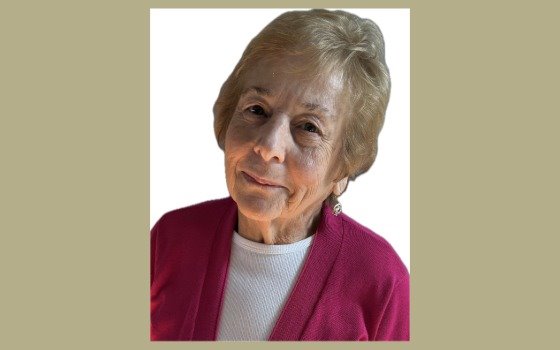
Volunteer Profile: Mary StapletonBy Chuck Pederson In November 2025, Chaska Historical Society (CHS) volunteer Mary Stapleton received the 2024 George C. Klein Memorial Award. Since 1980, the Chaska Rotary Club has presented the award to individuals or groups whose actions demonstrate their commitment to community service. The Rotary motto is “Service Above Self,” and the award reflects that outlook. The award is named for George C. Klein (1918–1979), a Chaska community leader. Mary was the 45th recipient of the award. |
|
|
|
|
|
Mary, her husband, John, and family moved from New York to Fieldstone Circle in Jonathan about 40 years ago, a year or two after Jonathan was established. She recalls that many roads were still unpaved, and during a rainstorm, she and her husband felt like pioneers slogging through the mud. Being from New York, they were uncertain how they would be received as outsiders. However, they felt very welcomed by other Jonathan residents and indeed by all of Chaska. Mary also recalls a divide between people in Chaska downtown and Jonathan residents, but with time, that gap was also bridged. A longtime CHS member, Mary became involved in volunteering with CHS about 5 years ago. This came naturally because of her lifelong attitude that being involved and giving back is an obligation, and you never know where it will lead. “And volunteering is fun,” she added. Among Mary’s many volunteer activities over the decades, she has been a guardian ad litem (a court-appointed advocate for minor children), volunteered with the League of Women Voters, acted as an election judge, advocated in court for the Southern Valley Alliance, and served on various Chaska commissions and boards and in the schools of District 112. Mary says she likes to stay behind the scenes. Her clear flair for the dramatic, however, shines through as a walking-tour leader for CHS, presenting stories of Chaska history. She is dedicated to the idea that saving and presenting local history is especially important these days with the large number of new Chaska residents. Mary insists she did not really deserve the award. “I’m not unique, but whenever I mentioned someone who deserved it more, the Rotary said, ‘They’ve already won it.’" Comments from fellow CHS volunteers contradict her self-deprecating view. Ruth Travis, CHS board member, said, “I have had the pleasure of working with Mary on several of the History Walking Tour events. People are drawn to her infectious joy and her knowledge of this community. She is a people person in the truest sense, and her enthusiasm for relating Chaska history to new guests is contagious.” CHS president, Lisa Oberski, commented, “Mary is an absolute delight to have helping us at Chaska Historical Society. She is positive, funny, and willing to help in any way she can.” Mary’s adult children were very excited when the award was announced. Mary tells the story that, on the day of the award, her family trooped down to the Chaska Curling and Event Center, where the award was to be bestowed. They found all the doors locked and the lights off. Not knowing what else to do, she called former Chaska mayor Bob Roepke, vacationing in Florida. Bob had made the original call to tell her she had won the award and where it would be awarded. Laughing, Bob told her, “Oh yeah, I forgot to mention that the venue has been changed to Crown of Glory church.” Mary did eventually receive the award. Mary summed up her feelings: “We are so thankful we wound up in Chaska.” |
|
|
|
Snowplowing the County RoadsBy Dorie Coghill February means winter in Minnesota, which means you have to watch out for those very large trucks with plows on the front and a sprinkler on the back throwing out salt and sand. Snowplow drivers today are equipped with cell phones and radios to keep in touch with each other and the main office and can be notified instantly when they are needed to fix a problem or maintain a stretch of road. But have you ever wondered what it was like before the city vehicles and staff had electronics to help them do their jobs? My dad’s first cousin, Ralph, plowed Carver County roads from the 1920s through the 1950s. After Ralph had passed, his wife, Ruth, composed a series of remembrances from those days. I’ve added some clarification notes, indicated with square brackets [ ], and some other minor changes have been made for clarity. Ralph started helping with the snowplowing in 1927 at the age of 16 and continued off and on until 1951. During that time, he also occasionally worked in other states on road crews while Ruth and their kids stayed here in Carver County. 1927In the winter Ralph helped with the snow plowing. There was a wing on the plow, so one drove, one man on the wing and one to change with the wing man. When they left they had a lunch pail full of food and that was all they ate until they got home, which was sometimes two or three days. If they were lucky a farmer along the way would ask them in for a hot meal. |
|
|
|
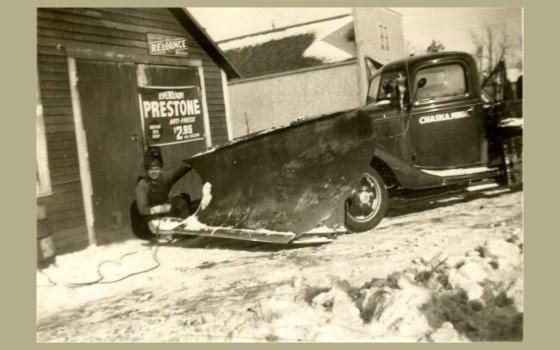 Chaska snowplow, about 1939. (Photo: Chaska Historical Society) |
|
|
|
Wednesday, February 8, 1939It snowed, so [in the morning] Ralph went to pick up his mother to stay at our house as the baby was due any day. Before noon he had to go plowing. We filled his lunch pail, as always, and that was the last we saw of him until 6 AM on Sunday. His son [Richard] had been born just before he came home. Ralph had time to change clothes and eat breakfast while the Doctor went to call an ambulance from the city. The ambulance was a bare van with an army cot, no way to fasten [a patient], and a folding chair. We were taken to St Andrew Hospital in Minneapolis where I was given a blood transfusion. I was in the hospital for 10 days and the baby for two weeks. |
|
|
|
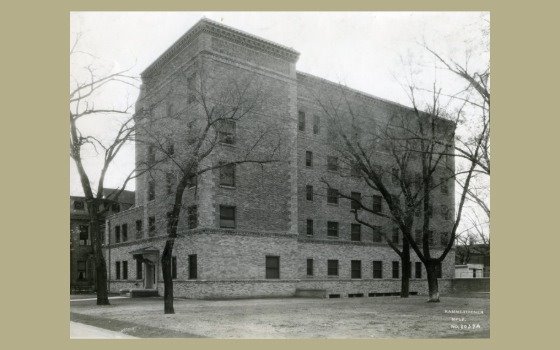 Built in 1924, Saint Andrew Hospital is located at 707 Fifth Street Southeast, Minneapolis. It was decommissioned in 1963. Today, the building is an apartment. (Photo: GNU Operating Systems) |
|
|
|
November 11, 1941We were now living across from Dauwalter Garage in Carver. The county called for help to get the plow ready. Ralph said some of the sandwiches [in his lunch box] were always frozen. Was the end of the week before he came home. (Would anyone now go out for three or four days and nights without a hot meal and no sleep?) |
|
|
|
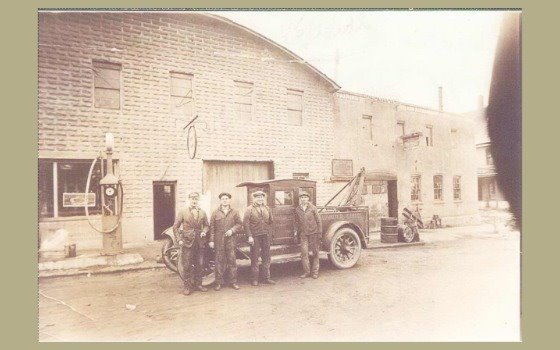 Dauwalter’s Garage, about 1915. (Photo: Chaska Historical Society.) |
|
|
|
September 1945 - April 1951Ralph now worked for Laketown Township. [Between Chaska and Waconia] he had 365 miles of gravel roads to maintain. He built one new road each summer. This was a one-man job. In fall, he did have help to put up snow fences. He did all the maintenance on the machinery himself. Winter was still a one-man job. Was not only 365 miles to plow, but every driveway had to be plowed. If he went out with the truck he was more apt to get home at night. In a snow storm the “Cat” [Caterpillar] had to be used. He was alone with it also. Many times a year he would be out three days and two nights or more. There were some farmers that would ask him in for a meal. The only word I would get from him would be when Elmer Klatt came in from the milk route. He always told me if he saw him [Ralph]. It could be another 24 hours before he would see him again. [Ralph] opened the main roads then [went back and] opened the driveways. His total income in 1946 was $2,224.23 [about $33,500 today]. April 1951We had a bad snow storm. The roads were getting soft and the snow was very heavy. The [county] Board had a meeting and [Ralph] was told that from then on all driveways were to be opened as he went along. He laid the keys on the desk and said “I quit” [as that meant it would take much longer to clear the roads themselves]. That was the end of his snowplowing career. Soon after, he started working for Continental Machine in Savage and stayed there until he retired in 1977. |
|
|
|
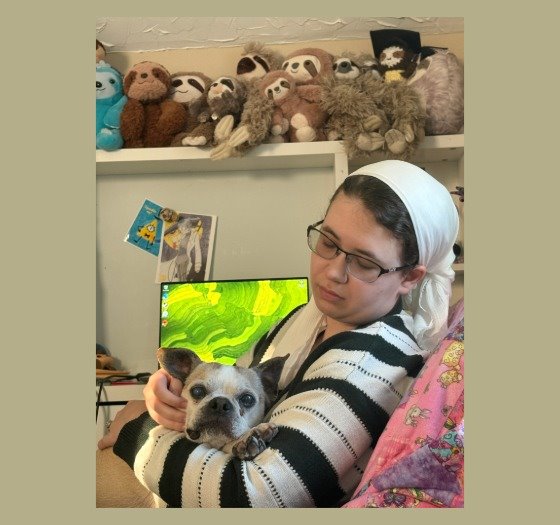
Volunteer Profile: Amanda Ridek-BernnBy Syd Ridek-Bernn It is not uncommon to feel a sort of calling to a place, a desire to know and experience everything you can about somewhere that holds a sort of meaning to you. This is a feeling that 23-year-old Chaska Historical Society (CHS) volunteer Amanda (Borgmann) Ridek-Bernn knows deeply, having been intrigued by historical Chaska for more than 12 years. |
|
|
|
|
|
“I grew up in Jonathan, west of Downtown Chaska,” Amanda said. “I remember thinking of Downtown Chaska like a place of secrets—somewhere that held something special I just didn’t know how to uncover.” Her first distinct memory of downtown Chaska was in 2014. She was attending World Learner School, and near the end of the school year, they had a field trip to do the walking tour that CHS hosts. “My friends and I lingered for a long time in City Square Park, where we sat in silence. . . . I remember feeling pulled to the earth.” Amanda remembers enjoying the quiet of the Chaska History Center building, feeling a sense of peace. “It was a meditative space,” she said, “where we could listen to the roots of the city as they breathed.” As she and her friends signed the guest book and wandered the exhibits, she knew she’d be back. It was around this time that Amanda really began to get into genealogy, ancestry, and history. She had grown up reading National Geographic magazine, devouring articles about ancient tombs, lost cities, and cultures far away. “I think I always wanted a home that made sense to me.” From her time volunteering with CHS, Amanda has learned that making sense of that home takes time—sometimes more than you’re prepared for. “The history of a whole city can’t be discovered in a day—if it could, we'd be done already!” Amanda says. “It’s a tremendous, continuing effort that is constantly revitalized by the amazing people we have in our volunteer base.” Amanda has been a part of many projects in her nearly 6 months volunteering, including working on an exhibit on the Chaska floods for the Carver Country Fair, leading Hauntings & History walking tours, and archiving donated items. “With [my fellow volunteers] I feel like I’m a part of something truly great.” Some of her favorite experiences when working in the History Center building have been seeing guests find a piece of information about their family. “I know that feeling, and how amazing it is,” she states. “I love getting to experience that excitement alongside them.” Amanda has had significant luck in recent years learning about her own family. She grew up just a few houses down from the Jonathan Silo, in a house her father built out of a Sears catalogue in the 1980s—a house that sits on top of what used to be the Bender Farm. “He didn’t know much about it,” she noted, “but he remembers excavating what remained of farm foundations. Stone and cement, deep in the dirt—buried in the weight of the past.” Like the remnants of the Bender Farm, Amanda’s family history is buried deep in Chaska’s yellow-clay dirt. While in college, she focused her Honors Society studies on her genealogy, and in the process did an interview with her paternal grandfather. During this interview, he gave her a book on Borgmann family history written by a relative in the 1990s (a copy of which she has donated to CHS). The book begins in 1882, with the immigration of 18-year-old Hugo Borchmann from the small fishing village of Regenwalde, Germany (now Resko, Poland). He was soon followed by his mother, Anna, and his sister, Hulda. Hugo spent his days working in the brickyards that built this city, and now, surrounded by that handiwork, Amanda does what she can to ensure that he and all the other people who built Chaska aren’t forgotten. |
|
|
|
From Clay Brick to Granite Curling StonesBy Ruth Travis I am a Winter Olympics fanatic. No matter which sport or event is being broadcast, I turn on the television and find myself spending countless hours watching. In fact, if medals were awarded for consecutive hours spent on my sofa during the Olympics, I believe I could be competitive! By far my favorite sport is Curling, in which players slide large stones across an ice sheet to score. As many of us settled in to watch the February 2026 Winter Olympics—held in Milan Cortina, Italy—Chaska was celebrating the 10-year anniversary of the Chaska Curling and Event Center and Chaska’s unique connection to this worldwide sport. Let’s look first at the present Curling center, and then we’ll peek at what used to be located on the site of the center and Firemen’s Park. Keep reading on Substack! |
|
|
|
Using Pretax Income for Charitable GiftsBy Larry Meuwissen Making charitable donations used to be something that made me feel good at least twice: once when making the gift, and again at tax time when I got to take a deduction for the amounts I gave to charity. Federal tax bills passed in 2017 and again in 2025 increased the standard deduction and also made significant changes to the rules and limits for itemized deductions. As a result, many taxpayers lost the enjoyment of seeing a separate deduction for charitable gifts on their tax returns. |
|
|
|
 Photo: Nataliya Vaitkevich, Pexels.com |
|
|
|
But the good news is that this is one time you can find something good about getting old. If you are over 70½ years old, even if you have not yet reached the age at which annual withdrawals are mandatory (mandatory withdrawals called required minimum distributions [RMDs] begin at age 73 for those born between 1951 and 1959 and at 75 for those born in 1960 and later) you are allowed to make gifts to charity directly from your 401K or other tax-deferred retirement accounts. This device is called a qualified charitable distribution (QCD), and it has some things to watch out for, but the most important is that you must arrange for your retirement plan administrator to issue your contribution(s) payable directly to your charitable recipients. In addition, be careful to keep a record of such contributions and remember to exclude them when filing your tax return. A QCD allows you to keep your full standard deduction and avoid paying taxes on your charitable gifts. So at tax time, you can still enjoy that second episode of feeling good about your donations. Every year, you can make one or more charitable gifts totaling up to $108,000 (yeah right, who has an RMD exceeding 100k?). Gifts made directly from your retirement fund are counted as part of your retirement account's required minimum annual distribution. They are deemed to be made “pretax” and are excluded from your income at tax time. Subject to the $108,000 maximum, you can donate all or any part of your RMD to charity. As always, consult your professional tax advisor to make sure that you comply properly with the requirements. May you enjoy many happy tax returns with enhanced good feelings about your charitable giving. Larry Meuwissen, a 1965 graduate of Chaska High School, is a retired attorney who resides in Saint Paul. Larry adapted the item from Susan Tomper, “Why You May Want to Hold Off on Year-End Giving,” Detroit Free Press, November 16, 2025. |
|
|
|
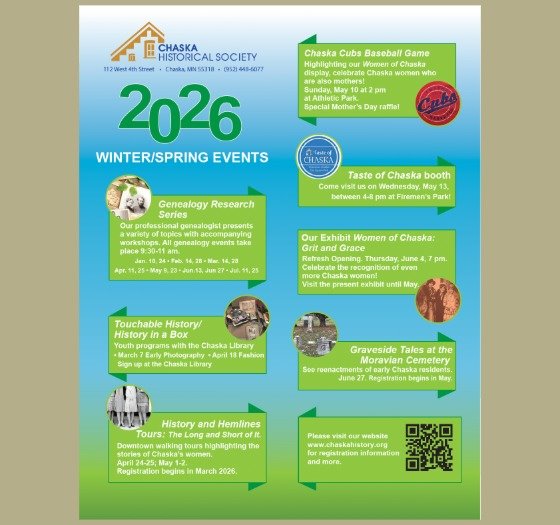
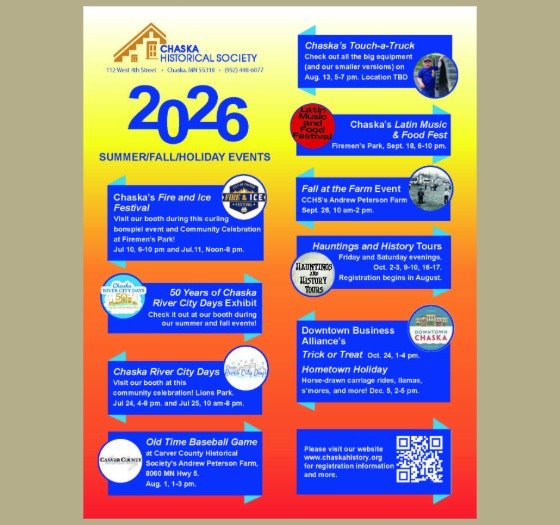
2026 Chaska Historical Society Events
|
|
|
|
|
|
|
|
2026 Winter/Spring Events ExpandedGenealogy Research SeriesOur professional genealogist presents a variety of topics with accompanying workshops. All genealogy events take place 9:30-11 a.m. - March 14, 28
- April 11, 25
- May 9, 23
- June 13, 27
- July 11, 25
Touchable History/History in a BoxYouth programs with the Chaska Library. Sign up at the Chaska Library. - March 7: Early Photography
- April 18: Fashion
History and Hemlines Tours: The Long and Short of ItDowntown walking tours highlighting the stories of Chaska's women. Registration begins in March 2026. Chaska Cubs Baseball GameHighlighting our Women in Chaska display, celebrate Chaska women who are also members! Sunday, May 10 at 2 p.m. at Athletic Park. Special Mother's Day raffle! Taste of Chaska BoothCome visit us on Wednesday, May 13, between 4-8 p.m. at Firemen's Park! Our Exhibit Women of Chaska: Grit and GraceRefresh opening. Thursday, June 4, 7 p.m. Celebrate the recognition of even more Chaska women! Visit the exhibit until May. Graveside Tales at the Moravian CemeterySee reenactments of early Chaska residents. June 27. Registration begins in May.
|
|
|
|
|
|
|
|